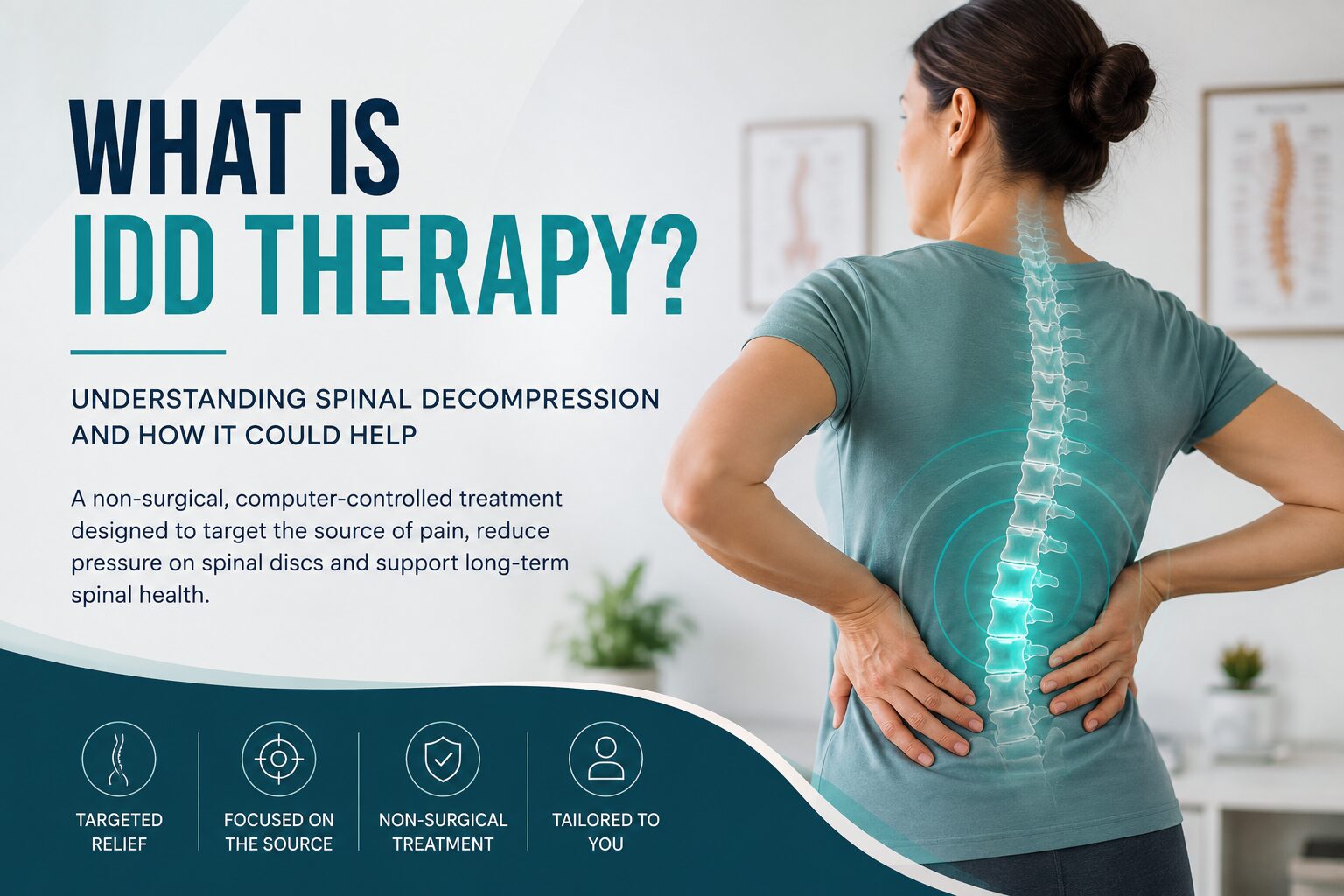
If you’ve been living with persistent back pain, sciatica, a bulging disc or nerve-related pain, you may have come across the term IDD Therapy.
But what actually is it?
Is it the same as traditional traction? Is it painful? What happens during treatment? And why has KB Osteopathic & Health Clinic invested in specialist IDD Therapy equipment?
We wanted to explain exactly what IDD Therapy is, why the clinic has introduced it and how it can provide another treatment option for people who haven’t found the relief they were looking for.
What does IDD stand for?
IDD stands for Intervertebral Differential Dynamics.
IDD Therapy is a form of computer-controlled spinal decompression designed to target a specific area of the spine.
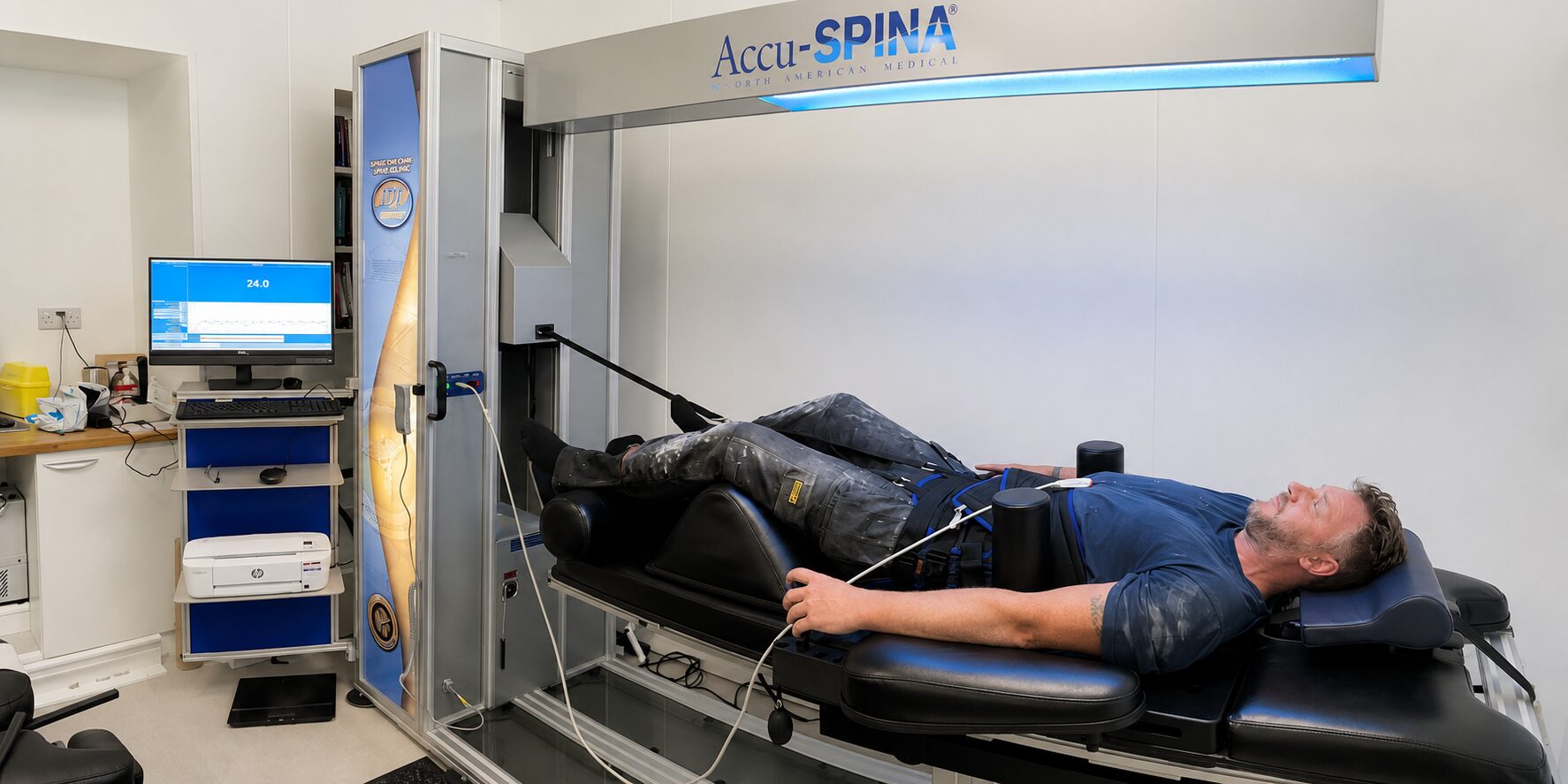
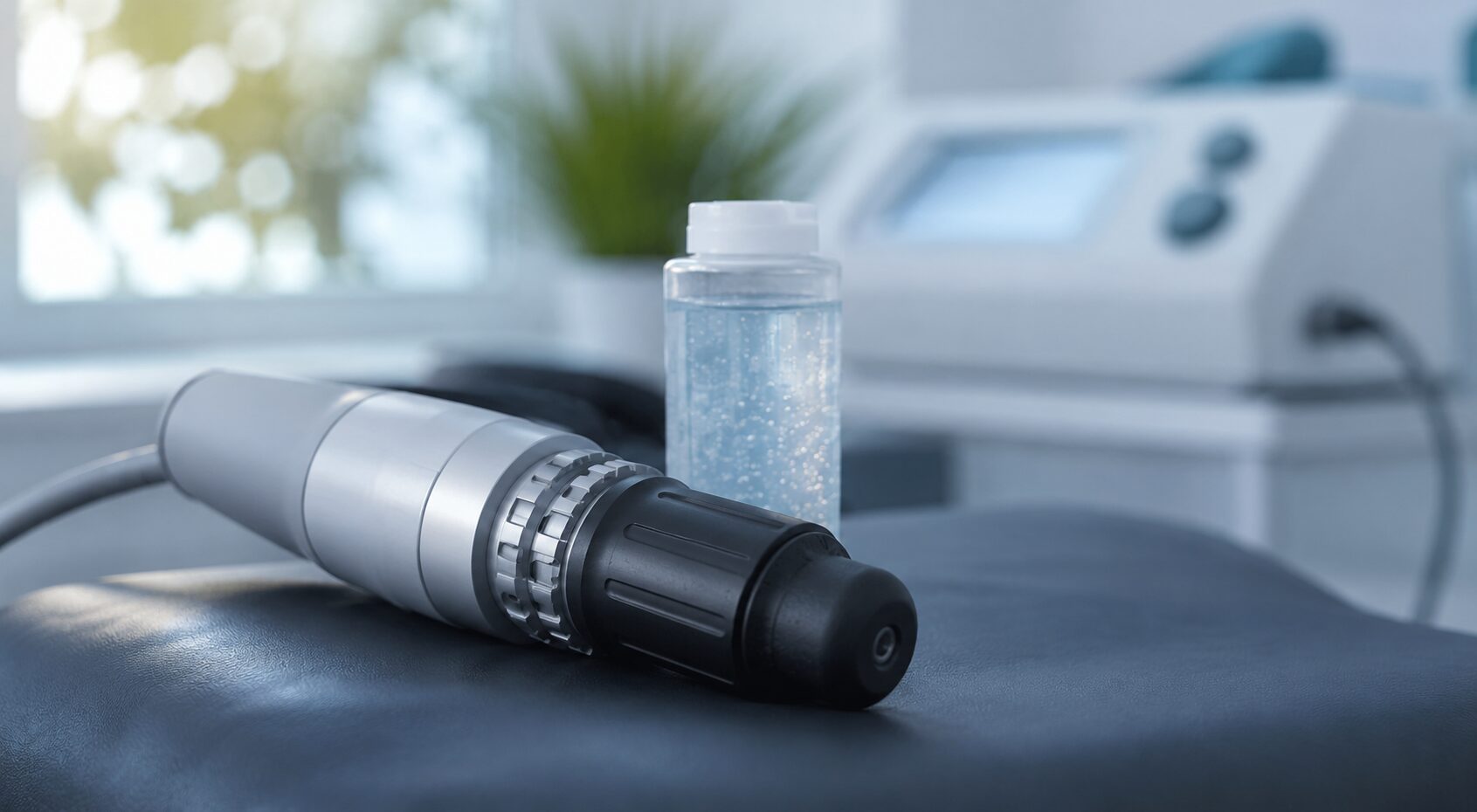
At KB Osteopathic & Health Clinic in Bishop’s Stortford, IDD Therapy is delivered using the Accu-SPINA system, which the clinic uses to provide targeted spinal decompression for suitable patients.
Unlike traditional traction, which generally applies a pulling force to the spine, IDD Therapy is designed to target the specific spinal level identified during your assessment.
The treatment uses carefully controlled distraction forces and progresses through a structured programme rather than relying on a single treatment session.
Why has KB Osteopaths invested in IDD Therapy?
Introducing IDD Therapy wasn’t simply a case of adding another treatment to the clinic’s list of services.
KB Osteopathic & Health Clinic has made a significant investment in specialist spinal decompression technology to give patients access to a treatment option that wasn’t previously available through the clinic.
The reason for that investment is straightforward.
Osteopathy can be extremely useful for many musculoskeletal problems, but not every patient responds to the same approach.
Some people continue to experience persistent back pain, sciatica, nerve symptoms or disc-related problems despite trying conventional treatments.
The introduction of IDD Therapy means the clinic can now offer another option for carefully selected patients, while still drawing on the clinical assessment and osteopathic expertise that sits at the heart of the practice.
You can find out more about the clinic’s wider osteopathic treatment in Bishop’s Stortford.
Why might someone need spinal decompression?
To understand the idea behind spinal decompression, it helps to understand the basic structure of the spine.
Your spine is made up of individual vertebrae with discs between them.
These discs act as cushions, helping absorb the forces placed on the spine while allowing it to move.
Over time, through injury, wear and tear or repeated strain, a disc can become damaged or change shape.
In some cases, this can contribute to pressure or irritation around nearby nerves.
That irritation can cause symptoms beyond the back itself.
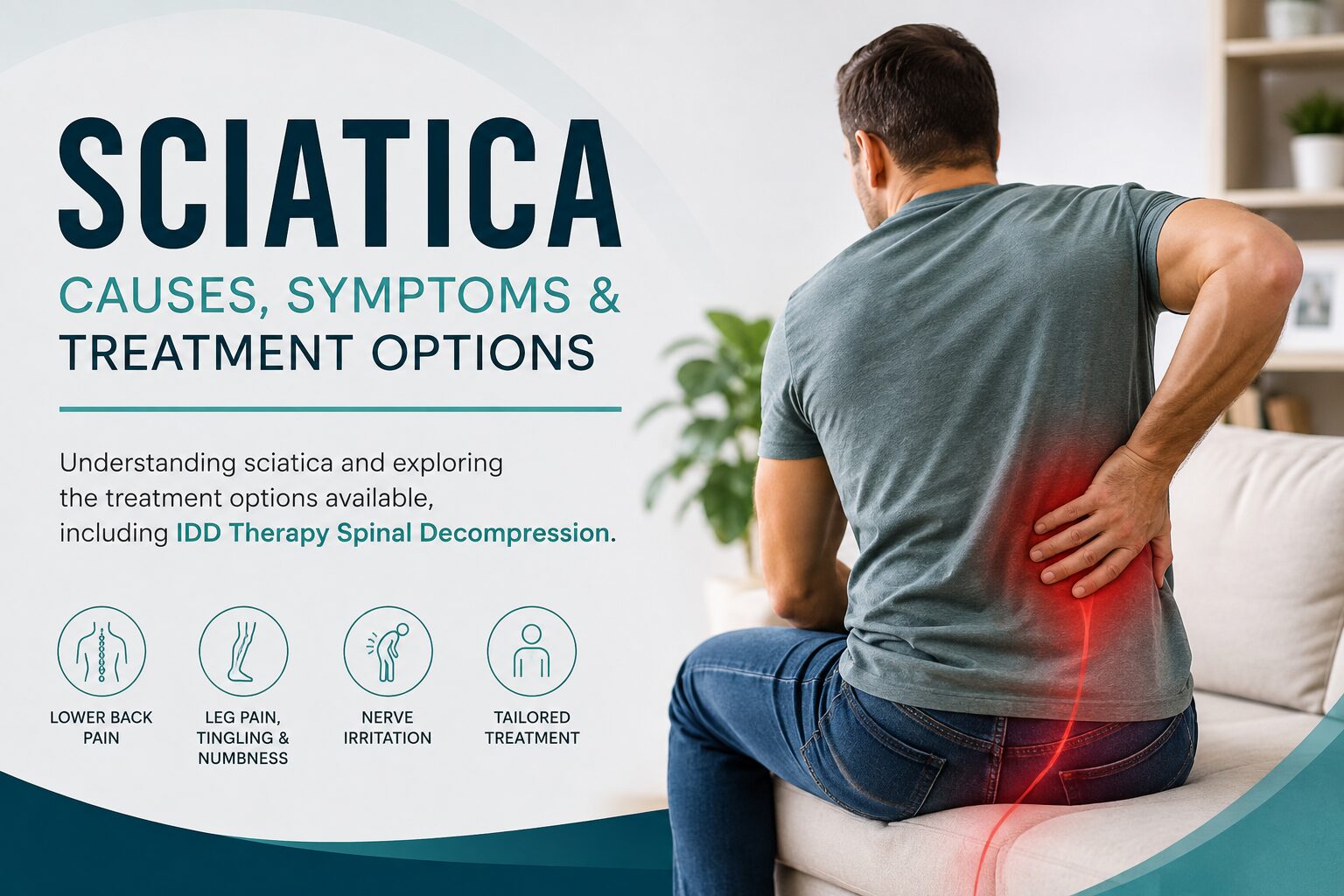
For example, irritation of a nerve in the lower back can contribute to sciatica, with pain, tingling, numbness or other symptoms travelling into the buttock and leg.
This is why someone can have a problem in their lower back but feel significant pain somewhere else.
Our guide to sciatica, its symptoms and treatment options explains this in more detail.
What is the difference between IDD Therapy and traditional traction?
This is one of the most important things to understand.
IDD Therapy is not simply a case of being strapped to a table and having your spine pulled.
The Accu-SPINA system used by KB Osteopaths is computer-controlled and designed to deliver carefully measured distraction forces to the specific spinal level being treated.
The treatment can therefore be adjusted according to the individual patient and the area being targeted.
The aim is to gradually reduce pressure around the affected spinal structures while encouraging movement within the treated area.
This targeted approach is one of the reasons specialist IDD equipment represents such a significant addition to the clinic.
What conditions can IDD Therapy be used for?
IDD Therapy isn’t designed for one particular condition.
At KB Osteopathic & Health Clinic, it may be considered for patients experiencing a range of persistent spinal and nerve-related problems, including:
- Herniated or slipped discs
- Bulging discs
- Sciatica
- Trapped nerves
- Degenerative disc disease
- Facet joint syndrome
- Chronic lower back pain
- Chronic neck pain
- Pain travelling into the arms or legs
- Tingling or numbness associated with nerve irritation
The clinic does not automatically recommend IDD Therapy simply because someone has back pain.
A full assessment is carried out first to determine whether it is appropriate for the individual.
For example, the clinic now also provides dedicated bulging disc treatment using a combination of osteopathic care and IDD Therapy where appropriate.
How does IDD Therapy actually work?
The treatment uses controlled distraction forces to target the affected area of the spine.
During treatment, the patient lies on the Accu-SPINA treatment table while ergonomic harnesses support the relevant area.
The computer-controlled system then delivers the programmed decompression treatment.
The intention is to reduce pressure around the affected disc and irritated nerves while gently encouraging movement in the treated spinal segment.
The clinic describes the treatment as helping to create an environment in which the body’s natural healing processes can take place.
Importantly, treatment is progressive.
The aim isn’t to force the spine into a particular position or deliver an aggressive pulling sensation. The programme is gradually adjusted as treatment progresses.
Does IDD Therapy hurt?
One of the first questions many people ask is whether spinal decompression is painful.
The treatment is designed to be gentle and controlled, and the clinic reports that most patients find IDD Therapy comfortable.
You remain fully clothed during the treatment and lie comfortably on the treatment table.
Heat therapy is provided before treatment to help relax the surrounding muscles, followed by cooling therapy after the decompression treatment.
Each appointment lasts around an hour, with the actual decompression treatment taking approximately 25 minutes.
What happens before your first IDD treatment?
This is an important part of the process.
You don’t simply arrive at the clinic and get connected to the machine.
Before IDD Therapy begins, you’ll have a detailed assessment with an osteopath.
The clinician will consider:
- Your symptoms
- Your medical history
- Previous treatment
- Your lifestyle
- How your symptoms affect your daily life
- The likely source of your problem
This assessment helps determine whether IDD Therapy is appropriate and, if so, how your treatment should be approached.
That clinical assessment is important because the machine is only one part of the treatment.
The aim is to combine specialist technology with professional clinical judgement.
Why combine IDD Therapy with osteopathy?
This is one of the key differences between simply accessing spinal decompression equipment and receiving IDD Therapy as part of a clinical treatment programme.
At KB Osteopathic & Health Clinic, IDD Therapy is not offered as a standalone machine-based service.
The clinic’s osteopaths can combine spinal decompression with hands-on osteopathic treatment, rehabilitation exercises and lifestyle advice where appropriate.
This means the treatment programme can be adapted around the individual rather than simply applying the same treatment to everyone.
The clinic’s osteopathic approach involves assessing the whole body and considering factors such as movement, posture, lifestyle and the way different areas of the body interact.
Who might benefit from IDD Therapy?
IDD Therapy may be particularly worth discussing if you’ve been dealing with persistent symptoms and haven’t achieved the improvement you were hoping for from previous treatment.
For example, you may have already tried:
- Physiotherapy
- Osteopathy
- Chiropractic treatment
- Exercise programmes
- Pain medication
- Other conservative treatments
You may also be looking for a non-surgical treatment option before considering more invasive approaches.
However, having persistent pain doesn’t automatically mean IDD Therapy is right for you.
The assessment is there to determine whether the treatment is appropriate and whether another approach would be more suitable.
Is IDD Therapy the same as surgery?
No.
IDD Therapy is a non-surgical spinal decompression treatment.
There are no surgical incisions and the treatment does not involve spinal injections.
For suitable patients, it provides another conservative treatment option to consider alongside other forms of care.
This does not mean that IDD Therapy replaces medical or surgical treatment where that is clinically necessary.
If symptoms suggest that further medical investigation is required, an osteopath may recommend appropriate referral or additional assessment.
Why is having IDD Therapy locally useful?
For people living in Bishop’s Stortford and the surrounding area, access to specialist spinal decompression means there is now another option available locally for people experiencing persistent spinal problems.
Rather than having to travel elsewhere to investigate whether spinal decompression may be suitable, patients can have an initial assessment with an experienced osteopathic team and discuss their options.
The clinic can then determine whether IDD Therapy, osteopathic treatment, a combination of approaches or another form of care is most appropriate.
IDD Therapy isn’t about treating everyone the same
Perhaps the most important thing to understand is that IDD Therapy isn’t a magic machine.
The technology is sophisticated, but the technology alone isn’t the treatment.
The value comes from combining the equipment with proper assessment, clinical experience and an understanding of the individual patient.
Two people can both have back pain but have completely different underlying problems.
One may benefit from osteopathic treatment and rehabilitation.
Another may have symptoms associated with a disc problem where IDD Therapy could be considered.
Another may require further medical investigation.
That is why assessment comes first.
Why KB Osteopaths chose to invest in IDD Therapy
The decision to bring IDD Therapy to the clinic reflects a desire to expand the treatment options available to patients with persistent spinal problems.
The clinic already provides a broad range of osteopathic and musculoskeletal treatments.
The addition of specialist spinal decompression technology allows the team to offer a more targeted option for patients whose symptoms may be associated with disc problems, nerve irritation or persistent spinal pain.
It’s an investment in technology, but more importantly, it’s an investment in giving patients more appropriate options.
Rather than every patient receiving the same treatment, the clinic can consider a wider range of approaches and build a programme around the individual.
Could IDD Therapy be right for you?
If you’ve been living with persistent back pain, sciatica, a bulging disc, nerve-related symptoms or another spinal problem, IDD Therapy may be an option worth discussing.
The first step isn’t treatment.
It’s assessment.
At KB Osteopathic & Health Clinic, your symptoms, history and individual circumstances are considered before deciding whether IDD Therapy is appropriate.
If it is, your treatment programme can be tailored around your needs.
If it isn’t, your osteopath can explain what other options may be more appropriate.
Find out more about IDD Therapy in Bishop’s Stortford
KB Osteopathic & Health Clinic has invested in specialist Accu-SPINA IDD Therapy equipment to provide patients with access to advanced spinal decompression alongside the clinic’s existing osteopathic care.
If you’re curious about IDD Therapy or wondering whether it could be appropriate for your symptoms, you can learn more about IDD Therapy Spinal Decompression or contact the clinic to arrange an assessment.
Book an appointment and speak to the team about your symptoms and treatment options.






Leave A Comment