
Sciatica can be painful, frustrating and, for some people, surprisingly difficult to get rid of.
The pain can travel from your lower back or buttock down into your leg, making everyday activities such as sitting, walking, working, exercising or sleeping uncomfortable.
For many people, sciatica improves with time and appropriate treatment. However, if symptoms persist, keep returning or have not responded to previous treatment, it may be worth having your symptoms properly assessed to understand what could be causing them.
At KB Osteopathic & Health Clinic in Bishop’s Stortford, IDD Therapy Spinal Decompression is available as a non-surgical treatment option for suitable patients experiencing persistent sciatica and other spinal conditions.
What is sciatica?
Sciatica describes symptoms caused by irritation or compression of the sciatic nerve.
The sciatic nerve is the largest nerve in the body and runs from the lower back through the buttocks and down each leg.
Sciatica commonly affects one side of the body and can cause:
- Pain travelling from the lower back or buttock into the leg
- Sharp, burning or shooting pain
- Tingling or pins and needles
- Numbness
- Weakness in the affected leg
The symptoms can vary considerably between people. Some experience relatively mild discomfort, while others can find the pain significantly affects their mobility and quality of life.
If you are experiencing symptoms that sound like sciatica, our Sciatica and Trapped Nerve treatment page provides more information about the condition and treatment options.
What causes sciatica?
Sciatica can have several different causes.
One of the most common is a problem with a spinal disc. The discs between the vertebrae act as cushions and help the spine move. If a disc becomes damaged or bulges, it can irritate or place pressure around a nearby nerve.
Other spinal problems can also contribute to nerve irritation.
This is particularly relevant when considering persistent sciatica because the source of the symptoms needs to be understood before deciding which treatment is appropriate.
A bulging disc can, for example, contribute to symptoms affecting the back and limbs when surrounding nerves become irritated.
What does sciatica feel like?
Sciatica isn’t always experienced as straightforward back pain.
You might notice pain travelling down the back of your thigh or into your calf or foot. You may also experience tingling, numbness or a feeling of weakness.
For some people, sitting for long periods makes symptoms worse. Others may find certain movements, lifting or prolonged standing aggravate the problem.
Because symptoms can vary, persistent leg pain should not simply be assumed to be sciatica without appropriate assessment.
How long does sciatica last?
There is no single timeframe that applies to everyone.
Some episodes of sciatica settle relatively quickly, while other cases can persist for considerably longer.
If symptoms are improving, staying appropriately active and following professional advice can form an important part of recovery.
However, if your symptoms aren’t improving, continue to return or are interfering with normal life, it may be worth seeking professional assessment.
This is particularly important if you have already tried treatment but continue to experience significant symptoms.
What treatments are available for sciatica?
The most appropriate treatment depends on what is causing your symptoms and your individual circumstances.
Treatment may include exercise and rehabilitation, osteopathic treatment, physiotherapy and other approaches.
At KB Osteopathic & Health Clinic, osteopathy is one of the treatment options available for musculoskeletal conditions. You can find out more about the clinic’s approach to osteopathic treatment.
For some people, however, symptoms can remain persistent despite previous treatment.
This is where a more targeted approach may be considered.
Could IDD Therapy help with sciatica?
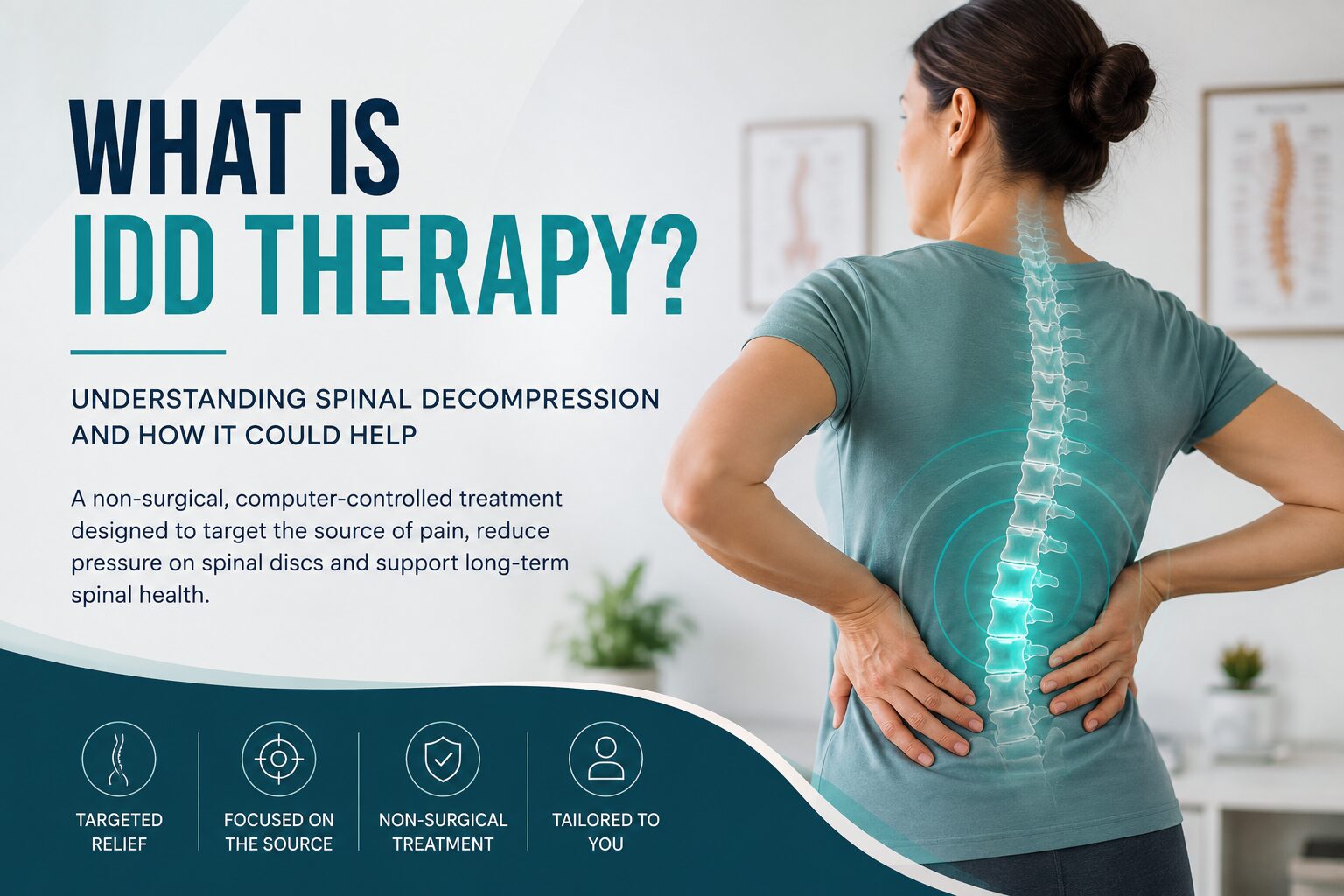
IDD Therapy Spinal Decompression is a treatment offered at KB Osteopathic & Health Clinic for suitable patients with persistent back pain, neck pain and nerve-related symptoms associated with spinal disc problems.
The clinic specifically lists sciatica, herniated discs, bulging discs, trapped nerves and degenerative disc disease among the conditions for which IDD Therapy may be recommended.
IDD Therapy is not intended to be a one-size-fits-all treatment. An assessment is carried out first to determine whether it is appropriate for the individual patient.
You can find out more about the treatment on the clinic’s dedicated IDD Therapy Spinal Decompression page.
How does IDD Therapy work?
IDD Therapy uses computer-controlled spinal decompression to apply carefully measured distraction forces to the affected spinal level.
At KB Osteopathic & Health Clinic, treatment is delivered using the Accu-SPINA system. The clinic explains that the system is designed to target the affected spinal level rather than applying conventional traction more generally.
The treatment is designed to gradually reduce pressure around the affected disc and irritated nerves while encouraging movement within the treated area.
According to the clinic, the treatment programme progresses gradually, allowing improvements to build over a structured course of treatment.
What happens during IDD Therapy?
Before treatment begins, you’ll have a full assessment with an osteopath.
The clinic considers your symptoms, medical history, previous treatment and lifestyle before deciding whether spinal decompression is appropriate.
If IDD Therapy is considered suitable, you remain fully clothed during treatment and lie on the Accu-SPINA treatment table.
Soft ergonomic harnesses support the treatment area while the computer-controlled system delivers the decompression treatment.
The clinic also provides heat therapy before treatment and cooling therapy afterwards.
An appointment lasts approximately one hour, with the decompression treatment itself taking around 25 minutes.
What if you’ve already tried other treatments?
People considering IDD Therapy have often already tried several different approaches.
You may have had osteopathy, physiotherapy, chiropractic treatment, exercises or medication without achieving the improvement you were hoping for.
That doesn’t necessarily mean there are no other options.
The clinic describes IDD Therapy as another non-surgical option for people whose symptoms remain persistent or continue to return despite previous treatment.
However, the important part is the assessment. IDD Therapy isn’t automatically appropriate simply because you have sciatica.
Your symptoms need to be assessed to determine whether spinal decompression is a suitable treatment option for you.
When should you seek urgent help for sciatica?
Most cases of sciatica are not emergencies, but certain symptoms require urgent medical attention.
Seek urgent medical help if you develop severe or worsening weakness or numbness affecting both legs, numbness around the genitals or anus, difficulty controlling your bladder or bowel, or other sudden significant neurological symptoms.
If you’re unsure whether your symptoms require urgent assessment, seek appropriate medical advice rather than relying on an online article.
Could IDD Therapy be right for your sciatica?
If you have persistent sciatica that hasn’t improved despite previous treatment, IDD Therapy may be an option worth discussing with a qualified practitioner.
At KB Osteopathic & Health Clinic in Bishop’s Stortford, every patient is assessed individually before IDD Therapy is recommended.
The clinic’s approach combines clinical assessment with spinal decompression and, where appropriate, other elements of care such as osteopathic treatment, rehabilitation exercises and lifestyle advice.
The aim is to understand your symptoms and determine the most appropriate treatment rather than simply putting every patient through the same programme.
Find out more about IDD Therapy in Bishop’s Stortford
If you’re struggling with persistent sciatica or other nerve-related back symptoms, you can find out more about IDD Therapy Spinal Decompression or contact KB Osteopathic & Health Clinic to discuss your symptoms.
You can also book an appointment for an assessment.







Leave A Comment