Call us now for free and impartial advice on Achilles Tendinopathy Treatment:
The Aims of Achilles Tendinopathy Treatment:
Help to relieve your symptoms
Reduce pain and swelling
Improve joint mobility
Advice on how you can improve your quality of life through diet and nutritional support, posture, and exercise
Our Hours
Monday: 8am – 8pm
Tuesday: 8am – 8pm
Wednesday: 8am – 8pm
Thursday: 8am – 8pm
Friday 8am – 8pm
Saturday: Closed
Sunday: Closed
Osteopaths spend a significant amount of time treating pain and dysfunction caused by Achilles tendinopathy.
Many people assume that Achilles pain is something they simply have to put up with or rest indefinitely. In most cases, osteopathic treatment can help considerably. Pain reduction, improved movement, and appropriate load management can greatly enhance recovery and long-term tendon health.
What Is Achilles Tendinopathy?
Achilles tendinopathy is an overuse condition affecting the Achilles tendon, which connects the calf muscles to the heel bone. It commonly develops due to repetitive strain, sudden increases in activity, poor biomechanics, or inadequate recovery. The condition can be classified as mid-portion Achilles tendinopathy or insertional tendinopathy, depending on where the tendon is affected.
Symptoms of Achilles Tendinopathy
Achilles tendinopathy may develop gradually and is often associated with running, jumping sports, prolonged standing, or changes in footwear. Symptoms commonly include pain and stiffness in the back of the ankle, tenderness or thickening of the tendon, swelling, and reduced strength or function, particularly during walking, running, or first thing in the morning.
How Can Osteopathy Help?
While Achilles tendinopathy requires appropriate management rather than a quick fix, osteopathic treatment can play a key role in reducing pain, improving tendon function, and preventing recurrence. Treatment focuses on restoring normal movement through the foot, ankle, and lower limb, while addressing contributing factors such as muscle tightness, joint restriction, and poor loading patterns.
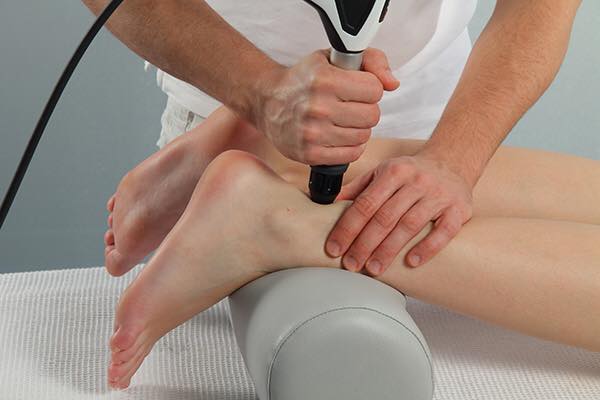
Osteopathic treatment may include gentle manual techniques to the ankle, foot, calf muscles, and surrounding structures. This is often combined with Radial Pressure Wave Therapy and Focused Shockwave Therapy to stimulate tissue healing, improve circulation, and reduce pain. Individualised exercises and load management advice may also be provided to support tendon recovery and long-term resilience.